Elastic.Mapping
Describe your Elasticsearch mapping with C# attributes. A source generator turns those declarations into component template JSON at compile time, so you never write mapping JSON by hand.
public class Product
{
    [Id]
    [Keyword]
    public string Sku { get; set; }

    [Text(Analyzer = "standard")]
    public string Name { get; set; }

    [Keyword]
    public string Category { get; set; }
}

[ElasticsearchMappingContext]
[Index<Product>(Name = "products")]
public static partial class MyContext;
From this declaration, the source generator produces all the JSON, hashes, and metadata that Elastic.Ingest.Elasticsearch needs to create templates, send bulk requests, and manage indices.
dotnet add package Elastic.Ingest.Elasticsearch
This pulls in Elastic.Mapping (with the bundled source generator) and Elastic.Channels as transitive dependencies.
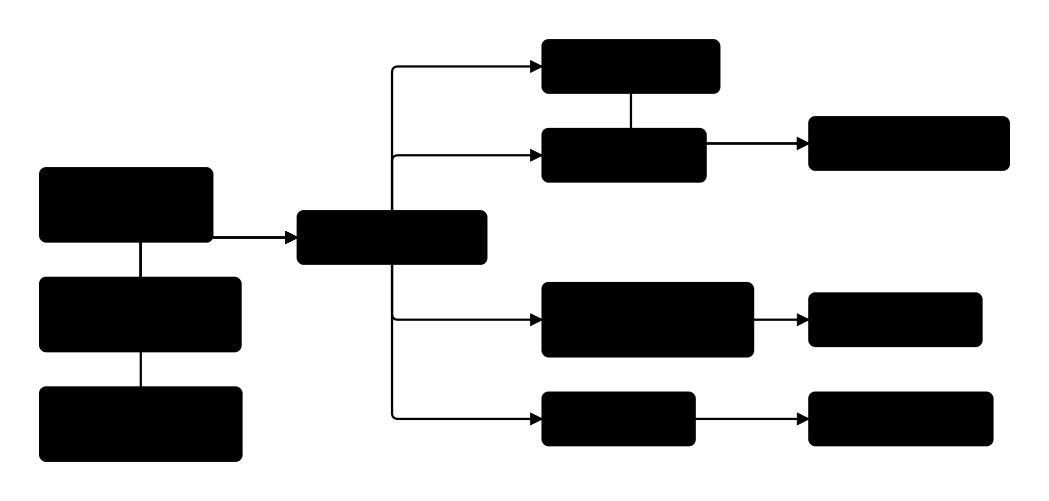
The generator:
- Finds classes marked with
[ElasticsearchMappingContext] - Reads each
[Index<T>],[DataStream<T>], or[WiredStream<T>]registration - Walks the document type's properties to infer Elasticsearch field types
- Parses any
ConfigureAnalysis/ConfigureMappingsmethods - Emits a partial context class with everything the ingest channel needs
What exactly gets generated?
For each type registration, the generator emits:
- Mappings JSON for the component template
propertiessection - Settings JSON with shards, replicas, refresh interval
- Combined SHA-256 hash for change detection (skips template updates when unchanged)
- Accessor delegates like
GetId,GetTimestamp,GetContentHash,SetBatchIndexDate - Index/search strategy metadata with write target, date pattern, data stream name, aliases
- ConfigureAnalysis delegate wired to your analysis configuration method
- MappingsBuilder extensions with strongly-typed per-property fluent methods
- Analysis name accessors for compile-time verified analyzer/tokenizer/filter references