Channel hierarchy
IngestChannel<T> is the top of a layered class hierarchy. Each layer adds a specific capability.
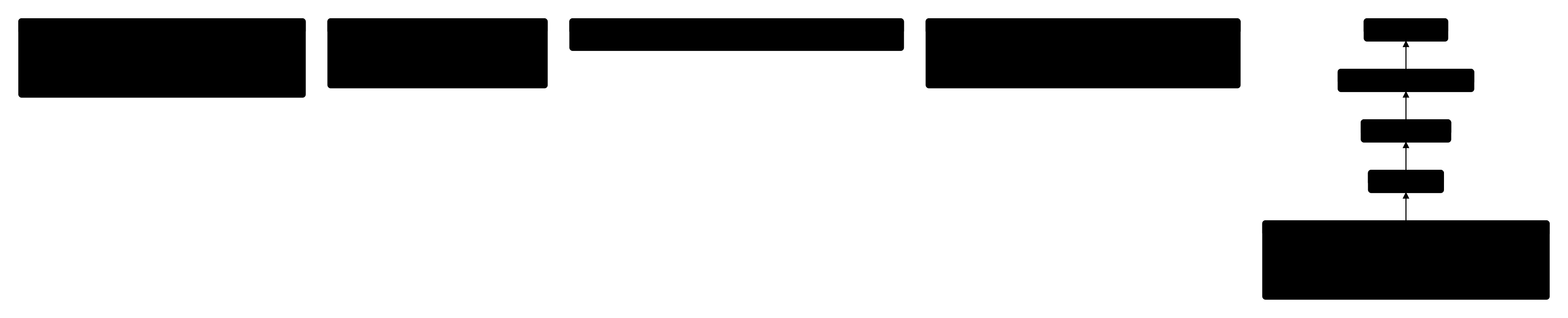
The foundation layer in Elastic.Channels. Provides:
- Two-stage inbound/outbound buffer (see push model)
- Concurrent export with throttling
- Backpressure and drain
- Retry with configurable backoff
All buffer configuration, threading, and lifecycle management lives here.
Adds per-item response analysis. Where the base class treats a response as pass/fail for the whole batch, this layer can:
- Zip sent items with individual response items
- Decide per-item whether to retry, reject, or accept
- Retry the entire batch for certain response codes (for example, HTTP 429)
In Elastic.Ingest.Transport. Integrates ITransport from Elastic.Transport:
- Passes the transport instance to
ExportAsync - Subclasses implement
ExportAsync(ITransport, ArraySegment<TEvent>, CancellationToken)to make HTTP calls
In Elastic.Ingest.Elasticsearch. Implements the Elasticsearch _bulk API:
- Serializes documents into NDJSON bulk format
- Parses
BulkResponseand maps items - Defines retry status codes (429, 500-599)
- Defines rejection criteria (non-2xx that aren't retryable)
The composable channel that users interact with. Adds:
- Strategy pattern for bootstrap, ingest, provisioning, alias, and rollover
- Auto-configuration from
ElasticsearchTypeContext - Public API for bootstrap, alias management, and rollover
Before IngestChannel<T>, specialized channel subclasses existed for each use case. These are now obsolete. See legacy channels for migration guidance.